How to Choose the Right Paint Brush Filament for Water-Based and Oil-Based Paints
Nov 13,2026
How to Choose Paint Brush Filament for Water-Based and Oil-Based Paints | BrushMake
Choosing the right paint brush filament does not have to be complicated. You only need to follow one basic principle: first consider the type of coating, and then consider the application surface.
For water-based coatings such as latex and acrylic paints, synthetic filament should generally be considered first because it does not absorb water easily and can maintain its working shape. For oil-based paints, varnishes, and alkyd coatings, natural bristle can provide good paint pickup and smooth paint release, while coating-compatible synthetic filament may offer better specification consistency, wear resistance, and controllability.
However, the final choice should not be based only on the material name. Filament diameter, length, taper, cross-section, blend ratio, and application surface can all significantly affect the actual performance of the finished brush.
Choose Filament According to the Coating
Filament for Water-Based Paints
Water-based coatings keep the filament in continuous contact with moisture throughout the painting process. Natural bristle absorbs water and can swell, soften, clump together, or lose its original shape.
Synthetic paint brush filament is generally more suitable because it has lower water absorption and more stable stiffness.
PET filament: Stable stiffness and low water absorption, suitable for general-purpose paint brushes and offering a certain cost advantage.
PBT filament: Good shape retention, chemical resistance, and recovery stability.
Synthetic filament blends: Different materials, diameters, or structures can be combined to balance paint capacity, softness, stiffness, and recovery.
For latex paint, acrylic paint, and water-based wood coatings, PET, PBT, or a properly designed synthetic filament blend is usually a practical starting point.
Filament for Oil-Based Paints
Oil-based paints, varnishes, and stains need bristles that hold and release thicker coatings smoothly. Natural bristle retains its shape because these coatings contain no water.
Natural hog bristle is generally the first choice; use tested synthetic filament when wear resistance and consistency matter.
Natural hog bristle: Good pickup and smooth release for varnishes, stains, and conventional oil-based coatings.
Solvent-compatible synthetic filament: Consistent stiffness and wear resistance for rough surfaces or repeatable production. Test solvent compatibility first.
Natural and synthetic filament blends: Combine a natural-bristle finish with synthetic durability and consistency.
For smooth finishing, start with natural hog bristle. For rough surfaces or consistent production, use a tested synthetic filament or blend.
Match Filament to the Application Surface
The coating type determines the basic material direction, while the application surface determines the required softness, stiffness, fineness, and wear resistance of the filament.
Smooth Surfaces
Cabinets, doors, metal, smooth wood, and fine-finish panels generally require finer or tapered filament. The objective is controlled paint release, even coverage, and fewer brush marks.
A soft or medium-stiff tapered synthetic filament blend can provide better edge control and a smoother finish.
General Wall and Wood Surfaces
Drywall, unfinished wood, and standard interior or exterior walls generally require a balance among paint capacity, recovery, and stiffness.
PET/PBT blends or composite filament structures can help the brush carry sufficient paint while maintaining control during repeated strokes.
Rough or Abrasive Surfaces
Brick, masonry, stucco, and heavily textured surfaces require stronger recovery, better wear resistance, and sufficient stiffness.
Natural bristle can carry paint effectively, but its tips may wear more quickly. Therefore, durable synthetic filament or a structured filament blend may provide a longer service life and more stable performance.
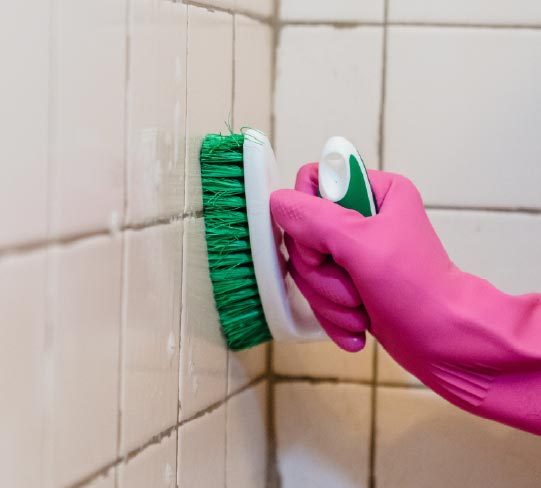
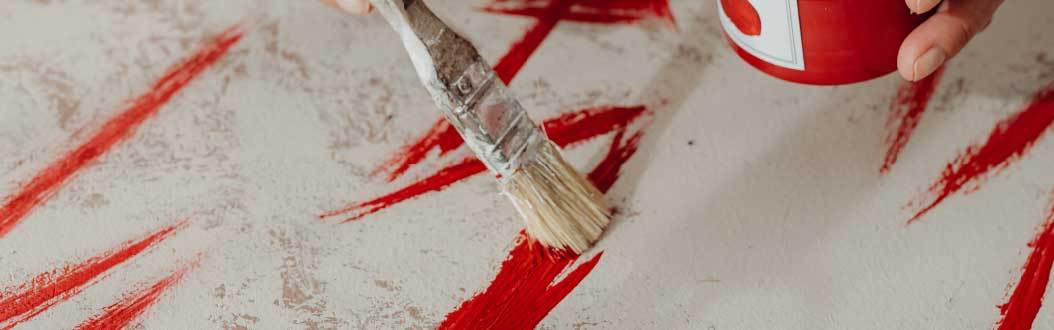
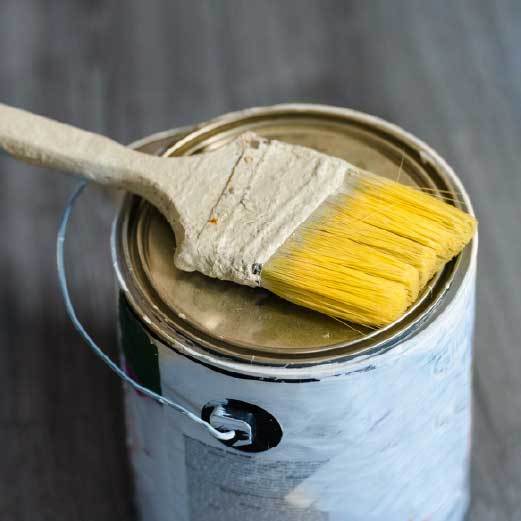
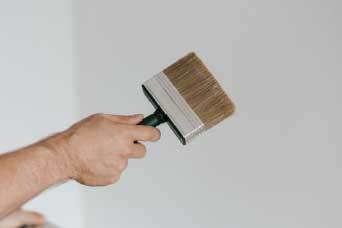
Smooth SurfacesGeneral Wall and Wood SurfacesRough or Abrasive Surfaces.
Look Beyond the Material Name
Even when two filaments are made from the same polymer, differences in physical specifications can produce different performance.
Diameter and Length
A larger diameter generally increases stiffness, while a smaller diameter provides a softer feel and finer surface contact.
A longer exposed working length makes the filament more flexible, while a shorter working length creates a stiffer brush head and more direct control.
These factors must be evaluated together. If the working length or tuft density is unsuitable, simply increasing the diameter will not necessarily improve performance.
Tapered
Tapered filament can create finer contact with the application surface and improve edge control, paint release, and finish quality.
Hollow
Hollow filament can reduce material weight and increase brush fullness. These structures should be selected for clear and measurable performance targets.
How a Professional Manufacturer Develops Filament Specifications
A reliable paint brush filament manufacturer should understand the specific application requirements before recommending a material.
The development process should include:
Confirm the coating: Determine whether the coating is water-based or oil-based and understand the relevant solvents, resins, and viscosity.
Confirm the application surface: Identify whether the brush will be used on smooth wood, walls, metal, masonry, or abrasive surfaces.
Set performance priorities: Determine which factor is most important among paint capacity, surface smoothness, edge control, stiffness, durability, and cost.
Build brush samples: Test the filament in the actual ferrule, tuft density, brush size, and production equipment.
Define batch standards: Set tolerances for diameter, length, color, stiffness, taper, crimp, and packaging.
Testing loose filament alone is not sufficient. The same filament may perform differently when tuft density, ferrule construction, working length, or brush-head shape changes.
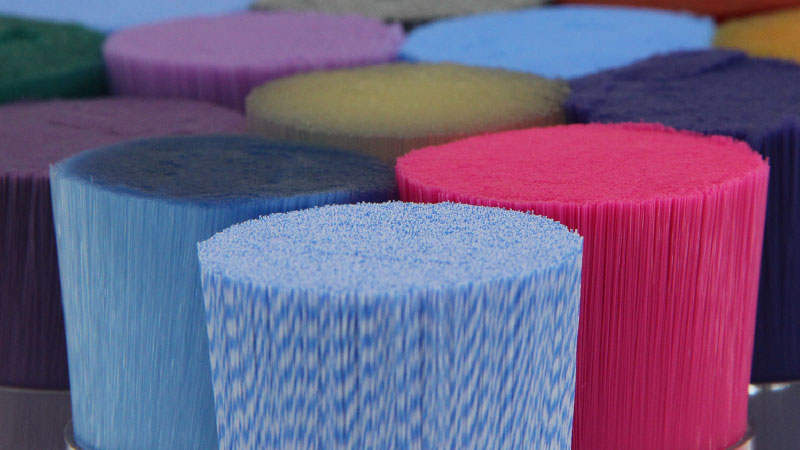
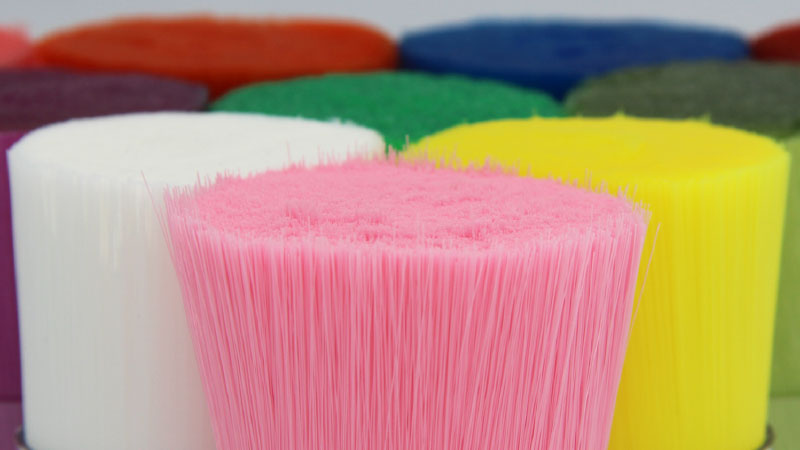
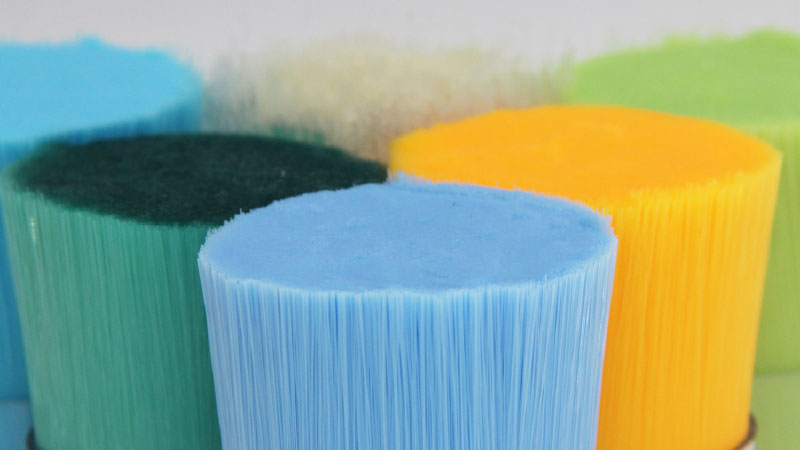
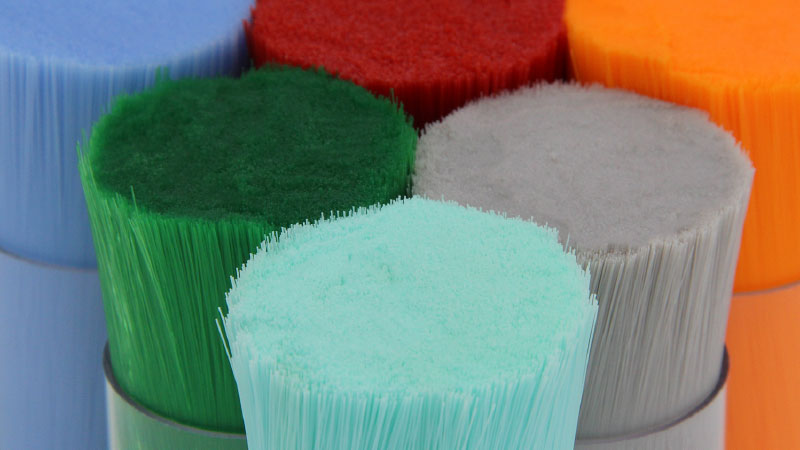
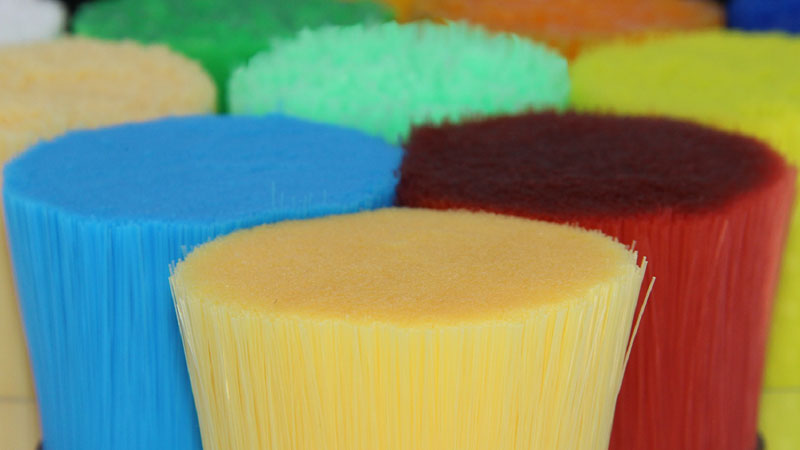
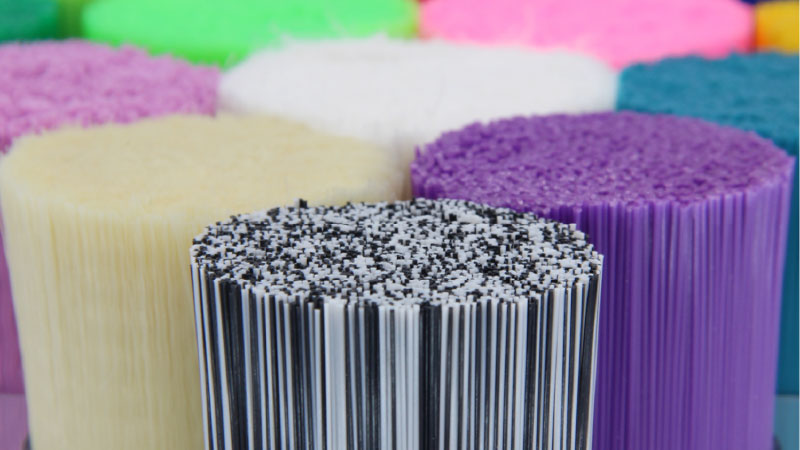
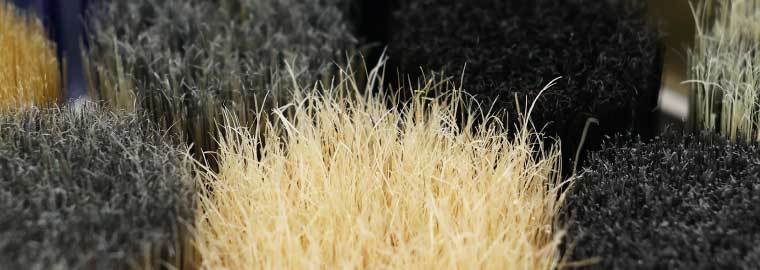
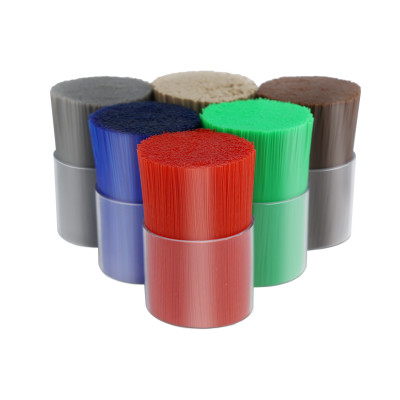
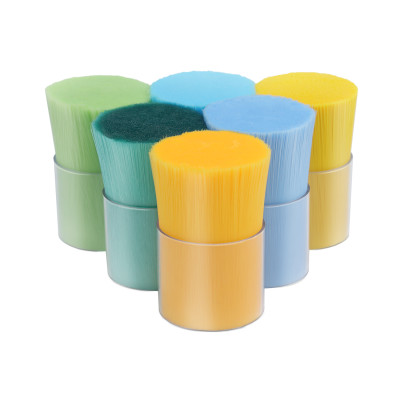
A collection of various paint brush filaments.
When Custom Paint Brush Filament Is Needed
Standard filament may be sufficient for general-purpose paint brushes. If a product requires specific stiffness, a special color, higher paint capacity, controlled paint release, a special cross-section, or compatibility with automated production equipment, custom paint brush filament can be developed.
Customization can include:
PET, PBT, or blended materials;
Solid or hollow structures;
Different diameters and working lengths;
Customized color and gloss;
Application-specific blend ratios.
Before mass production, the final specification must be validated with the customer’s actual coating and finished-brush structure.
How BrushMake Supports Paint Brush Manufacturers
BrushMake provides brush manufacturers, OEM companies, distributors, and product developers with support for material selection, specification development, and sample testing.
You can explore BrushMake’s paint brush filament products to review synthetic, tapered, hollow, and blended filament solutions. For projects requiring application matching or customized specifications, visit Paint Brush Solutions.
The goal is not simply to select a polymer, but to develop a filament specification that matches the target coating, application surface, brush structure, production process, and cost requirements.
Conclusion
For water-based coatings, PET, PBT, nylon, and synthetic filament blends are generally preferred because they do not absorb water easily and can maintain their working shape.
For oil-based coatings, natural bristle remains a practical option with good paint pickup and smooth paint release. However, synthetic or blended filament may be more suitable when durability, batch consistency, customization, or performance on rough surfaces is more important.
The most reliable selection method is simple: identify the coating type, evaluate the application surface, define the performance requirements of the finished brush, and then validate the material solution through finished-brush testing.